BMW R 1300 R (2025) – Review


By Michael Mann
BikeSocial Managing Editor
06.01.2026


Technical Review - Ben Purvis, Apr 25
Riding Review - Michael Mann, Jan 26


£13,200 - £16,255
143.5bhp
239kg
5/5
Ever since BMW introduced the R 1300 GS for the 2023 model year it’s been just a matter of time before the company’s other boxer twins adopted the same all-new engine and chassis that debuted on the class-leading adventure bike. For 2025 the R 1300 R was the first follow-up model – replacing the previous R 1250 R and adopting a sportier approach to the naked bike market than its predecessor.
BMW’s 2025 R 1300 R marks a bold evolution of its iconic roadster, blending muscular performance with cutting-edge tech. At its heart is the revamped 1300cc ShiftCam boxer twin, now delivering 143bhp and 110 lb-ft of torque paired with a lighter chassis and BMW’s innovative variable spring rate suspension—making real-time ride adjustments a reality. The new model also introduces the optional ASA (Automated Shift Assist) semi-automatic transmission and radar-assisted cruise control, pushing the boundaries of rider convenience. With sportier ergonomics, lighter wheels, and a sharper aesthetic, the R 1300 R is more agile and engaging than ever. It’s a compelling choice for riders who crave dynamic performance without sacrificing comfort—ideal for spirited weekend blasts, daily commutes, or even light touring. Whether you're upgrading from a previous R model or seeking a premium naked bike with character and comfort, the R 1300 R offers a refined yet exhilarating ride that hides behind its more ‘pipe-and-slippers’ appearance. Is this the best bike we’ve seen BMW’s 1300cc boxer twin in? Read on for a more detailed look.
Pros & Cons
Latest boxer engine with transmission mounted underneath instead of behind
Substantially more power than the R 1250 R, semi-auto option is unique in the naked bike class
Surprisingly achievable starting price is more than £3k less than a base R 1300 GS
The fastest semi-auto production bike right now
A lot of the desirable tech is optional, quickly ratcheting up the cost
Soft gear change might not suit all
Aesthetics lack pizazz
239kg…


2025 BMW R 1300 R - Price & PCP Deals
At £13,200 the starting price of the most basic version of the R 1300 R is surprisingly affordable – just £200 more than the previous gen R 1250 R and more than £3000 less than the entry fee to R 1300 GS ownership – but that figure can be rapidly increased with the addition of a few desirable options pack.
The SE version, which comes with some of those options fitted as standard, comes in at £15,500, while the SE ASA variant that also adds BMW’s ‘Automated Shift Assistant’ semi-auto transmission to the mix, cranks the cost up to £16,255. But even in that high-end spec, that’s still a few hundred quid less than the cheapest version of the R 1300 GS that shares the same engine and platform. If you don’t need the GS’s high-rise riding position and semi-off-road style, the R looks like a tempting prospect.
BMW offers four variations on the theme. The base model comes only in one colour – ‘snapper rocks metallic’ (that’s blue to anyone else) – with black forks. The ‘Exclusive’ version gets racing blue paint, a painted seat insert, an engine spoiler, and a dark chrome exhaust instead of stainless steel. Step up to the ‘Performance’ variant and you get white paint, gold forks, the ‘Dynamic package’ including DSA electronic suspension and the ASA transmission, shorter bars, milled adjustable pegs, sport seats for rider and passenger, ‘design option’ wheels and sport suspension. At the top of the line there’s the Option 719 Kilauea package that includes ‘blackstorm metallic’ paint, black forks, ‘Option 719’ wheels and milled parts.
The current PCP deal looks like this:
Representative APR: 8.9%
Monthly Payments: From £189 per month
Term: 36 months
Customer Deposit: £2,997.78
Optional Final Payment: £8,609.38
On-the-road Price: £15,500 (SE version)
Annual Mileage: 5,000 miles (excess mileage charge: 10.5p per mile)
Total Amount Payable: £18,222.16


2025 BMW R 1300 R - Engine & Performance
BMW’s 1300cc boxer twin, introduced on the BMW R 1300 GS, is the biggest revamp of the company’s signature engine in years and includes a bigger bore and shorter stroke than its predecessor to hike power from 134hp to 143.5bhp (or a more pleasing-sounding 145hp if calculated using slightly weaker metric horses).
That new power peak arrives at the same 7750rpm as before, while torque maxes out at 149Nm (110lbft) at 6500rpm, up from 143Nm (105.5lbft) at 6250rpm for the old 1250 motor. The redline sits at 9000rpm.
But the changes are far more substantial than tweaked dimensions and outputs. Most importantly, the DOHC motor’s transmission now sits underneath the engine rather than behind it and is integrated into a single part with the motor. That redesign saves weight – a substantial 6.5kg from the whole powertrain – and centralises the mass of the bike more tightly around the centre of gravity, improving handling.
It's still a six-speed box, with a wet slipper clutch, and powers the rear wheel via an updated version of BMW’s Paralever shaft drive rear end. As on the GS, BMW’s ASA semi-auto transmission is an optional extra, adding electronic actuators to the clutch and shifter to enable fully-auto and semi-auto modes. It eliminates the clutch lever, but there’s still a foot-operated shifter – albeit one that’s connected to electronic switches rather than actually moving cogs inside the transmission. ASA also works hand-in-hand with the optional radar-based adaptive cruise control, allowing the bike to shift its own gears as it automatically changes speed to keep pace with traffic.
The standard bike gets a trio of riding modes – road, rain and eco – to adapt the power delivery and the rider assistance systems, while the optional Riding Modes Pro pack adds ‘Dynamic’ and ‘Dynamic Pro’ modes. DTC traction control is also standard, with the option of upgrading to DCT-Shift, included on the Performance version of the bike, that lets you tweak the amount of rear wheel slip.
So, how does it actually ride? Despite tipping the scales at 239kg – and therefore somewhat surprisingly a couple of kilos heavier than the GS, but still lighter than the RT or RS - it never feels like a lump. The boxer engine is full of character, just as we’ve come to expect. It makes all the right noises: mechanical, a little animalistic, yet smooth and eager in performance when you open the throttle. Give it a twist and the bike lunges forward with an urgency that defies its weight and would give the latest batch of super nakeds a run for their money. It’s raw, relentless, and has that trademark BMW grunty punch in the lower gears.
Out on the road, it’s sharp and accurate, easily quick enough to keep up with any fairing wearers which on appearance isn’t what’s supposed to happen. When you’re not chasing corners, it settles into a relaxed rhythm that makes cruising genuinely enjoyable. This isn’t just another powerful roadster, nor is it playing with the dick swingers in the 200bhp club, it’s the thinking rider’s alternative to a super naked: all the poise, performance and personality, without the compromise. Power delivery is beautifully spread across the rev range, so overtakes are effortless, motorway cruising is smooth, and town riding isn’t jerky. Even when ridden hard, 50mpg is pretty respectable for a big twin.
Then there’s BMW’s new Automated Shift Assistant (ASA), the German marque’s version of the recently fashionable clutchless gear change – see KTM and Yamaha for their takes which follow Honda’s DCT, evolving since 2010. It’s designed to make life easier without killing the fun, and this was my first taste of BMW’s effort. Hold the front brake, tap the gear lever, open the throttle, and go - no clutch lever in sight. Finding neutral again is a different matter. Anyway, manual shifts feel soft, almost like flicking a switch, but they’re slick and consistent, more so than any BMW Boxer I’ve ridden before. ‘Drive’ (or ‘D’) mode is toggled via a button on the left switchgear (which means automatic, as opposed to ‘M’ for manual) and does a decent job of upshifting naturally. Downshifts in D are smooth – too smooth perhaps, and it tends to hang on to top gear unless you brake. Filtering without a clutch lever is a mixed bag: great for avoiding hand ache, but occasionally your focus is on the gearbox and not the white van man’s mirror. Overall, ASA adds convenience without stripping away the essence of motorcycling. I like the novelty, even after a fortnight with the R, but would I miss a clutch after a month or two? Hmm, probably not, and knowing what we know about BMW, the system will be even better in a couple of years. And then there’s its price, more of which later.
With the lack of clutch lever, the R is among the most powerful twist-and-go motorcycle on the market, and on private test track (not) I managed a sub-4-second 0-60mph time.


2025 BMW R 1300 R - Handling & Suspension (inc. Weight)
The engine isn’t the only massive change to come with the adoption of the 1300 motor – BMW has also ditched its long-serving tubular steel chassis design in favour of a frame made of pressed and welded sheet steel, bolted to a cast aluminium rear subframe.
BMW moved away from its once-ubiquitous Telelever front suspension with the R 1250 R, and there’s no return to the tech with the new R 1300 R, which has fat, 47mm upside-down telescopic forks.
The optional DSA (Dynamic Suspension Adjustment) system adds electronic adjustment for the damping, preload and, for the first time on a bike with telescopic forks, the spring rate at the front as well as the back. That means the bike can be instantly tweaked for two-up riding or luggage, and the DSA system is also tied into the bike’s riding modes.
New wheels, 1.4kg lighter than the previous design thanks to a hollow-spoked construction, are standard. The Performance variant gets ‘Design option’ wheels, but more importantly benefits from uprated suspension including a longer fork and spring strut, increasing the height by 10mm for improved cornering clearance, and firmer damping than the standard version.
BMW’s ‘ABS Pro’ system is standard, with a ‘Sport brake’ available as an option. Both are made up of twin four-piston radial front calipers at the front and a two-piston caliper at the rear, operated via a combined braking system so the front lever adds a touch of rear brake as well. The Sport brake option brings titanium-coloured calipers and BMW claims a slight improvement in brake performance.
Unladen, the bike weighs in at 239kg, which is exactly the same as the previous R 1250 R, despite the lighter engine and wheels of the new model. You can slice two kilos off the mass by adding the optional M Lightweight lithium-ion battery instead of the standard lead-acid one.
On paper the bike appears weighty, in fact it’d fight in the same division as the GS, though those chassis changes mean the R carries itself well on the road – its portliness only apparent when shuffling around in your garage or car parking space. The redesign of the gearbox/engine layout also helps, and offers a significant balance advantage over the 1250, proved further when testing on some faster road – eager to turn but perfectly poised through longer corners, it was a real and somewhat surprising pleasure to ride quickly – a distinct area of improvement over previous incarnations. And on the bouncier Fen roads the fancy suspension soaked up many imperfections to offer a far more civil and composed ride. My coccyx was grateful.
The linked braking system seems to operate in an alternate manner depending on riding mode – Road mode, for example, adds too much front brake when applying a little rear brake when I’m trailing braking to control the speed through corners. There’s less interference in Dynamic mode.


Spot the difference. Hint: it’s the clutch lever
2025 BMW R 1300 R - Comfort & Economy
BMW says that the new R 1300 R is ‘much sportier’ than its predecessor – reflected in both its styling and its chassis setup – and as a result there’s likely to be some compromises when it comes to comfort.
That doesn’t mean this is some sort of extreme creation that will send you to the chiropractor as rapidly as it can cover the 0-60 dash. This is BMW, after all, and nobody does touring bikes much better, so some of that is sure to rub off.
For the R 1300 R, BMW has shifted the bars down and the pegs back, putting more of your weight over the front wheel, but it’s also added a layer of adjustability so you can tweak the compromise to your personal preference. The bar clamps can be rotated 180 degrees to shift the bars forwards or back by 10mm, and optionally you can add adjustable footpegs with four positions to the Performance version of the bike.
There are also multiple optional seats, higher or lower than the standard setting, giving a range from 785mm to 810mm. All the seats can be had with heating, too.
Fuel consumption is officially rated at 58.8mpg, and since the aluminium tank holds 17 litres, that gives a potential range of 220 miles. I couldn’t match the claimed figures and struggled to get above 50mpg – explained by noting my preference to challenge the firm’s “Masters every bend” claims instead of opting to utilise cruise control for hours on end traversing the country’s motorways.
At 6ft tall, 14.5 stone (91kg) pre-Xmas, and with a 34” inside leg, my own frame tucked neatly ‘into’ the R. A selling point I feel is how you look and feel on a bike – as comfortable as it may be to sit on, you don’t want to catch a glimpse of your reflection in a shop window and feel a little sick come into your mouth. As is the case with modern machinery at this kind of price point, everything is adjustable but I found the bike to fit me remarkably well in standard form. For the dual carriageway sections (and even though the weather was very pleasant during my time with this rather friendly German), I noticed a lack of wind protection both stylistically and practically. As you’d expect there are both official and unofficial optional extras.


2025 BMW R 1300 R - Equipment
While the R 1300 R comes with a decent level of standard kit including LED lighting and a 6.5-inch TFT screen with phone connectivity you can really up the ante once you start to delve into the options catalogue.
Headline options include BMW’s ‘Riding Assistant’ front radar, with adaptive cruise control and frontal collision warning, which becomes particularly suitable when combined with the optional semi-auto ASA shifter (fitted to our test bike), so the bike can change its own gears when the cruise control is in use. The appearance of the matt black radar cover above the solo headlight is an acquired taste, though not a deal breaker for me. I’ve mentioned it already but I have more to say… I’m glad to have had the chance to use ASA – given the choice I’d have opted for a traditional gear change method but soon grew to like BMW’s system, despite neutral being so damn hard to find. User error probably. I found the system to be rather dynamic. It a cinch to become acquainted with and once you’ve gone for the clutch lever ‘ghost grab’ as you come to your first halt, you won’t do it again. Yes it feels weird but only for the first couple of rides, and then you start thinking, ‘why did anyone invent the clutch lever in the first place’, it even looks a bit odd as you glance down and see just a handlebar with no lever in front. Around town it doesn’t lurch or change at inappropriate moments, this is a very well evolved system already. It’s one downside, if I can call it that, is the gearchange feel in ‘D’ mode. So while there’s no clutch lever, there is still a traditional foot-controlled gear change lever which is more like a switch. On one side of the coin it’s soft, smooth and offers no mechanical clunk. On the other side, it’s a £3k option.
Engine braking and power characteristics alter with each riding mode, plus suspension settings too while on the move, though I did find Road mode to be quite soft. It’s a very similar self-levelling preload and semi-active damping system that we’ve seen on the latest R 1300 GS model which of course uses a telelever set-up. Yet the R uses telescopic forks, so this is a novelty.
BMW’s Headlight Pro system, adding a cornering light ability, is also optional, as a navigation preparation that’s upgraded to include electronic unlocking for the sat-nav cradle. The same remote locking can also be used on the optional panniers, which are ‘electrified’ to include central locking, built-in interior lighting and a USB-C charge port inside the left-hand case. At 26 and 29 litres right and left, they add a substantial amount of storage space, too.
Worthy of note is the familiar and intuitive BMW switchgear continuing to reign supreme.
2025 BMW R 1300 R - Rivals
If you’re looking for a naked roadster with a boxer twin engine and shaft drive there’s no alternative to the BMW R 1300 R – and despite the increasingly busy naked bike segment that offers a host of options with similar performance at a range of prices, that can work in the BMW’s favour.
If the shaft drive and engine layout isn’t a concern, you might consider the following:
Honda CB1000 Hornet - Is the CB1000 Hornet 2025’s biggest motorcycling bargain? It’s got to be on the shortlist thanks to that £9k tag and superbike-based engine.
Moto Guzzi V100 Mandello - Not strictly a naked bike, but closest to the BMW in terms of its twin-cylinder engine and shaft final drive. It’s miles off in terms of power, though.
Ducati Streetfighter V2 - Ducati’s latest streetfighter is similar on price but has less power than the BMW. It’s much lighter and more focussed, though.
Honda CB1000 Hornet | Price: £9099


150bhp / 76.7lb-ft
211kg
Moto Guzzi V100 Mandello | Price: £13,650
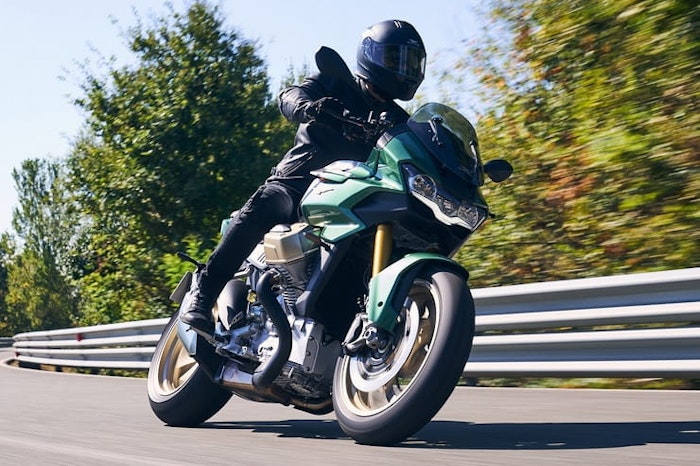
115bhp / 75.2lb-ft
233kg
Moto Guzzi V100 Mandello | Price: £13,650 Ducati Streetfighter V2 | Price: £13,990

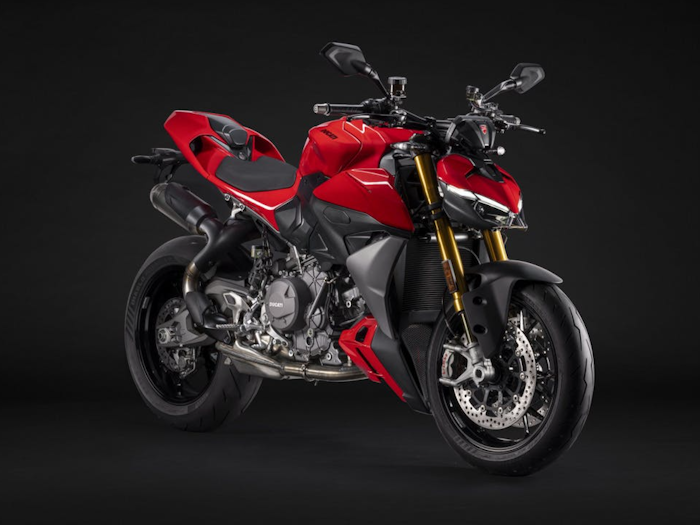
120bhp / 68.8lb-ft
177kg

2025 BMW R 1300 R - Verdict
I’m often asked about the bikes that I own or the ones I would like to, and most of the time the answer is either an Aprilia Tuono V4 or the most recent bike I rode. However, despite its unsexy appearance, the 2025 BMW R 1300 R, is certainly a top three contender, and damn close to a place at the top of my podium. Though being a man(n) who’s partial to a bit of bling, I’d want the ASA version in Motorrad colours and with plenty of upgrades too, and all of a sudden there’s a huge £20k price tag-shaped reason why it doesn’t slide straight in at number one.
This R 1300 R is an impeccable and vastly underrated motorcycle – a ravishingly refined version of the more common sporty naked. With a interesting mix of sharp performance, advanced technology and everyday comfort alongside BMW’s signature desirability and intuitive cockpit design, the R SE (yes, you read that correctly) remains underrepresented in sales charts – a hidden gem for riders who value sophistication and substance. A premium product with premium features and premium controls, and much more dynamic than the outgoing 1250 R. Perhaps owners and their Facebook groups are full of IYKYK and Sssshhh emojis. Oh, mind your shins on the sticky-out cylinders though. You’ll only clunk them once.
If you’d like to chat about this article or anything else biking related, join us and thousands of other riders at the Bennetts BikeSocial Facebook page.
Do you own this bike? Tell us what it’s like, or ask us questions about it at bikeclub.bennetts.co.uk.

2025 BMW R 1300 R - Technical Specification
| New price | BMW R 1300 R - £13,200, BMW R 1300 R SE - £15,500, BMW R 1300 R SE ASA - £16,255 |
| Capacity | 1300cc |
| Bore x Stroke | 106.5 x 73mm |
| Engine layout | Air/liquid-cooled 2-cylinder 4-stroke boxer |
| Engine details | Two overhead, chain-driven camshafts, counterbalance shaft and variable intake camshaft system |
| Power | 143.5bhp (107KW) @ 7750rpm |
| Torque | 110lb-ft (149Nm) @ 6500rpm |
| Transmission | Constant mesh 6-speed gearbox, shaft drive, optional ASA semi-automatic transmission |
| Average fuel consumption | 58.8mpg claimed |
| Tank size | 17 litres |
| Max range to empty | 220 miles |
| Rider aids | Cornering ABS, cornering traction control, optional radar front collision warning |
| Frame | Steel frame, aluminium subframe |
| Front suspension | 47mm telescopic USD forks |
| Front suspension adjustment | Optional DSA electronic adjustment for damping, preload and spring rate |
| Rear suspension | EVO Paralever, monoshock |
| Rear suspension adjustment | Optional DSA electronic adjustment for damping, preload and spring rate |
| Front brake | Twin floating brake discs, 310 mm, 4-piston radial brake calipers |
| Rear brake | Single disc brake, 285 mm, 2-piston floating caliper |
| Front wheel / tyre | 120/70 ZR 17 |
| Rear wheel / tyre | 190/55 ZR 17 |
| Dimensions (LxW) | 2126mm x 1000mm |
| Wheelbase | 1511mm |
| Seat height | 785mm – 810mm |
| Weight | 239kg (kerb) |
| Warranty | 3 years |
| Servicing | TBC |
| MCIA Secured Rating | Not yet rated |
| Website | www.bmw-motorrad.co.uk |

What is MCIA Secured?
MCIA Secured gives bike buyers the chance to see just how much work a manufacturer has put into making their new investment as resistant to theft as possible.
As we all know, the more security you use, the less chance there is of your bike being stolen. In fact, based on research by Bennetts, using a disc lock makes your machine three times less likely to be stolen, while heavy duty kit can make it less likely to be stolen than a car. For reviews of the best security products, click here.
MCIA Secured gives motorcycles a rating out of five stars (three stars for bikes of 125cc or less), based on the following being fitted to a new bike as standard:
A steering lock that meets the UNECE 62 standard
An ignition immobiliser system
A vehicle marking system
An alarm system
A vehicle tracking system with subscription
The higher the star rating, the better the security, so always ask your dealer what rating your bike has and compare it to other machines on your shortlist.
Getting a motorcycle insurance quote with Bennetts is easy.
We compare prices from our panel of top-tier insurers, to find riders our best price for the cover they need. With common modifications covered as standard, our policies are rated Excellent on Trustpilot and 5 stars by Defaqto. We are an award-winning UK broker, with a UK-based contact centre and 24/7 claims support.
Buy direct or renew at bennetts.co.uk, or via our contact centre, to gain access to a free BikeSocial Membership - unlocking discounts on kit, tyres, training, and exclusive customer-only VIP experiences.


