Kawasaki ER-6f (2012-2016) - Review & Buying Guide


By Jon Urry
Massively experienced road tester
09.12.2025


2012 Model was available in Candy Lime Green and Metallic Spark Black
£2500 - £3999
72bhp
209kg
4/5
In 2006 Kawasaki launched what was in retrospect a very forward thinking model – the ER-6n. This unassuming parallel-twin middleweight arrived with funky styling and a spirited engine, not to mention a bargain price tag. Shortly followed by the more practical ER-6f model, which was basically the same aside from its (slightly rattly...) full fairing, this range of easy-going machines sold well for Kawasaki. Then, in 2012, Kawasaki took quite a bold decision and rather than save R&D cash and just keep knocking out the same old ER models with different paint and slight styling changes, instead they invested a bit of money into the range and while the parallel-twin motor remained pretty much unchanged, both the ER-6n and ER-6f gained a new chassis and sharp look. Paving the way for them to evolve into the current Ninja 650 and Z650 models, the 2012-2016 generation is the pick of the ER-branded bikes. And you can have one in your garage for less than £3000, proving that 14 years on they still deliver on value for money while remaining great fun to ride.
Pros & Cons
Low price tag
Good practicality
Fun to ride
There isn’t much tech aside from optional ABS
You need to keep an eye on its finish
The engine feels a bit old-school compared to rivals


In 2013, the Metallic Spark Black ws dropped in favour of Pearl Stardust White, while Candy Lime Green gained some black accents
2012-2016 Kawasaki ER-6f - Prices
Brand new the ER-6f cost £5999 with ABS adding £400 to the price tag (this wasn’t an option on the ER-6n, which was cheaper at £5799). Nowadays you can pick up a ratty example for as little as £2500 but you are better off spending closer to £3000 for a nice one. Don’t be afraid of buying from a private seller, the ER is very reliable and major issues are few and far between. The top-end of the ER-6f model range is a touch under £4000 for a low-milage 2016 model (there are a few for £3500), which is still reasonable value for money.


2012-2016 Kawasaki ER-6f - Engine & Performance
The parallel-twin motor has remained pretty much the same throughout its life and the 2012 model’s claimed peak power of 72bhp is actually a bit more than the 68bhp the current Ninja 650 is claimed to make with both producing the same 47ft.lb of torque.
A large-bore and short-stroke motor in its design, the ER’s engine feels far lazier than other parallel twin rivals and has a beautiful thumping nature to its power delivery. While this sees it less speedy to pick up revs than the likes of the more modern-feeling MT-07, it gives it easier-going characteristics while not sacrificing much in the way of top end performance. Not that many riders feel the need to rev the hell out of the ER and instead it generally lives in its mid-range, an area that was slightly boosted in the 2012 update.


2014 saw Candy Lime Green gain some matt black accents and was joined by CAndy Burnt Orange and Metallic Moondust Gray (sic)
While the engine is mechanically very solid, you need to be a bit cautious on used bikes when it comes to the exhaust. A single-piece unit, if there are any holes in it then you generally need to replace the whole exhaust system and that can be a fight if the studs and nuts that hold the headers to the motor are badly rusted – and they probably will be! Check the exhaust well, especially around any welds and where the header pipes meet the under-engine collector box. The ER has 7500-mile service intervals with a valve-clearance check at 15,000 miles, which is a point a lot of used bikes are reaching. Expect to pay roughly £500 for this service so bear the mileage in mind when making an offer.

2012-2016 Kawasaki ER-6f - Handling & Suspension (inc. Weight)
The 2012 ER-6f has a completely different perimeter-style frame to the older generation, something you can tell by looking to see if there is a frame tube running around the motor – the old model has one, the new generation lacks it. But that’s just the start, the 2012 bike has a ‘backbone’ design of subframe to make its waist 50mm slimmer and reduce the effective distance to the ground for rider’s feet, a new swingarm and even altered suspension. Despite retaining the same style of telescopic forks and monoshock as the previous model, the 2012-onwards ER-6f has a longer suspension stroke front and rear to help absorb bumps better. Also, to assist rider comfort, the seat height is 20mm taller (an increase negated by the new subframe) to allow the rider’s legs to stretch out and the bars 20mm wider. And you can certainly tell the difference when you ride the bike.


For 2015, Candy Lime Green was joined by Pearl Flat Stardust White and Metallic Spark Black
Faster to turn than the older model and yet just as stable and planted on the road, the 2012-onwards ER-6f is a delight to ride. Sporty but never over-the-top, it is a fun B-road blaster that has much more handling potential than many give it credit for. Yes, the suspension can feel a touch soft when you really push on, but if you are new to two-wheels, the ER will teach you all you need to know about cornering in safety.
In he used market, much like the motor, there isn’t much to worry about aside from the usual used bike checks for crash damage, suspension leaks, seized brake calipers (or sticky sliders) and worn bearings and chain and sprockets. The ER-6f was sold with ABS as an option, so ask if it is fitted or look for a sensor ring on the left hand disc of the front wheel in pictures.

2012-2016 Kawasaki ER-6f - Comfort & Economy
The ER-6f may be a middleweight but it is built in a ‘big bike’ style and never feels too small or unsubstantial with high bars and low pegs aiding comfort levels. The swap to a two-piece seat in 2012 from the previous model’s single seat set-up also included thicker padding on the seats, making life easier for both the pillion and rider’s backsides. While the non-adjustable screen is a bit small, there are taller options out there and it’s good to see a pillion grab rail as well as luggage hooks included as standard on a budget-conscious bike as well as effective mirrors (which were increased in length in the update by 10mm).


For 2016, the Candy Lime Green stayed while Candy Persimmon Red and Metallic Carbon Grey were the new colours.
When it comes to economy, you can expect to average around 47mpg during mixed use but it is easy to increase this to nearly 60mpg with careful riding (there is an economy light on the dash to help you achieve this goal). Thanks to its fairly large 16L tank, that means you can hit 150 miles without worrying about the fuel level. And yes, there is a fuel gauge.

2012-2016 Kawasaki ER-6f - Equipment
There is very little to write home about when it comes to equipment. Aside from the option of ABS, the likes of connectivity and traction control only arrived with the Ninja 650 model range. That said, the 2012 generation’s dash (which is the reverse of the older model with an analogue rev counter and digital dash) does have a remaining range display, average/instant fuel consumption and Economical Riding Indicator which the older model lacks. Not that this is much to write home about...
When it comes to accessories, aside from the commuter’s favourites (heated grips, crash protection, top box) very few ER-6fs are altered. There is the occasional loud pipe or tall/dark screen and a fair few with tail tidies fitted but the majority are pretty standard. This is a bike that is generally bought and used by newer riders who may not feel confident enough or even see the need to modify it that much.
2012-2016 Kawasaki ER-6f - Rivals
There are lots of middleweight options out there and you can pick from a parallel-twin, V-twin or even an inline-four. All the Japanese manufacturers aside from Suzuki offer a naked or faired option, so you can take your pick. There are also pricier and more tech-heavy options such as the Ducati SuperSport or Aprilia RS660.
Yamaha Tracer 700 (2016-2019) | Price: £3500-£6000

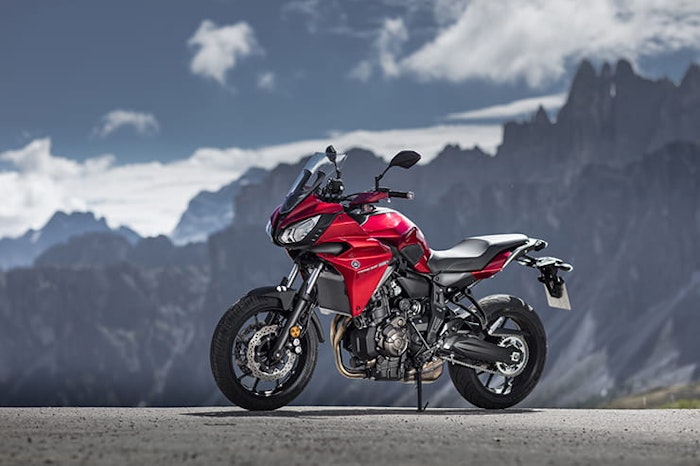
74bhp / 50lb-ft
196kg
Honda CBR650F (2014-2017) | Price: £2999 - £5000
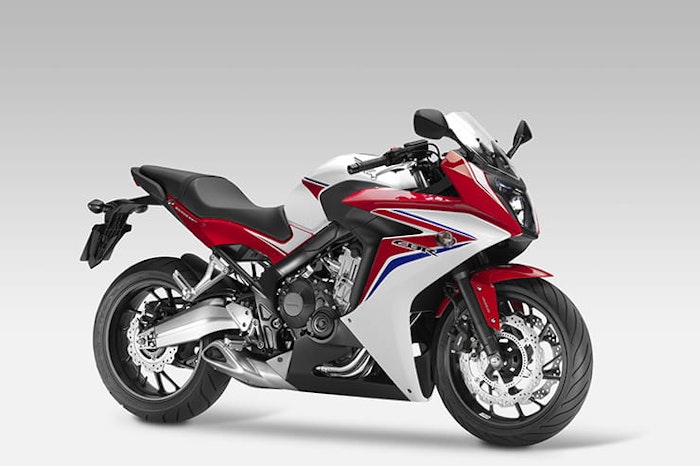
86bhp / 46lb-ft
211kg
Suzuki SV650 (2016-2025) | Price: £3500-£5999
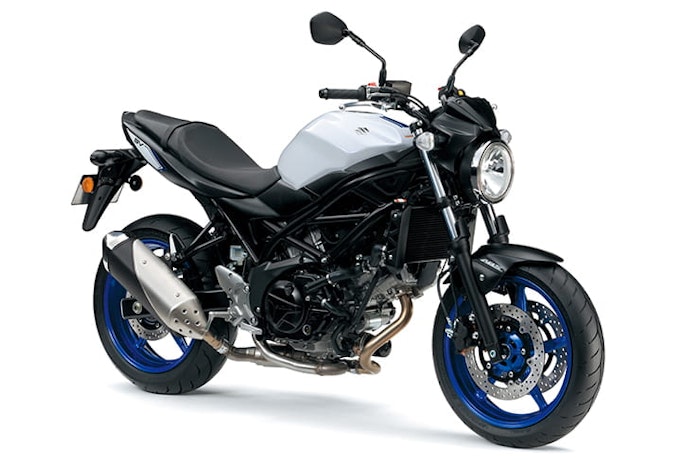
75bhp / 47lb-ft
197kg

2012-2016 Kawasaki ER-6f - Verdict
Historically, the faired ER-6f model outsells the naked ER-6n, which isn’t surprising to learn when you ride the bike. A wonderfully easy-going and relaxed middleweight, the ER-6f is a touch old-school in certain areas – namely its engine and lack of tech – but it is still a charming, reliable and fun bike to ride and the 2012-2016 generation looks like it belongs more in the Ninja family than the older more bulbous models (which is why it gained the name in 2017). With prices starting at just £2500, it makes for the ideal first sportsbike (yes, it can be classed as sporty) and can even be made A2-legal if required. While the MT-07-based Tracer 700 is more engaging to ride and has a better motor as well as enhanced weather protection, prices for this start at £1000 more and it doesn’t look as sporty. If you are after a cheap run-about, there is nothing at all wrong with the Kawasaki ER-6f.
If you’d like to chat about this article or anything else biking related, join us and thousands of other riders at the Bennetts BikeSocial Facebook page.
Do you own this bike? Tell us what it’s like, or ask us questions about it at bikeclub.bennetts.co.uk.


2012-2016 Kawasaki ER-6f - Technical Specification
| Original price | £5999 (plus £400 for ABS) |
| Current price range | £2500-£3999 |
| Capacity | 649cc |
| Bore x Stroke | 83mm x 60mm |
| Engine layout | Parallel-twin |
| Engine details | Liquid-cooled, dohc, 8v |
| Power | 72bhp (53kW) @ 8500rpm |
| Torque | 47lb-ft (64Nm) @ 7000rpm |
| Top speed | 115mph |
| Transmission | Six-speed, chain final drive |
| Average fuel consumption | 47mpg |
| Tank size | 16 litres |
| Max range to empty (theoretical) | 170 miles |
| Reserve capacity | 34 miles |
| Rider aids | Optional ABS |
| Frame | Perimeter, high-tensile steel |
| Front suspension | 41mm telescopic forks |
| Front suspension adjustment | None |
| Rear suspension | Monoshock |
| Rear suspension adjustment | Spring preload |
| Front brake | 2 x 300mm petal discs, two-piston calipers. Optional ABS |
| Rear brake | 220mm petal disc, one-piston caliper. Optional ABS |
| Front tyre | 120/70 - ZR17 |
| Rear tyre | 160/60 – ZR17 |
| Rake/Trail | 25°/ 110mm |
| Dimensions (LxWxH) | 2110mm x 770mm x 1180mm |
| Wheelbase | 1410mm |
| Ground clearance | 130mm |
| Seat height | 805mm |
| Kerb weight | 209Kg Wet (2011kg with ABS) |

Getting a motorcycle insurance quote with Bennetts is easy.
We compare prices from our panel of top-tier insurers, to find riders our best price for the cover they need. With common modifications covered as standard, our policies are rated Excellent on Trustpilot and 5 stars by Defaqto. We are an award-winning UK broker, with a UK-based contact centre and 24/7 claims support.
Buy direct or renew at bennetts.co.uk, or via our contact centre, to gain access to a free BikeSocial Membership - unlocking discounts on kit, tyres, training, and exclusive customer-only VIP experiences.


